The booking conversation
The three questions I ask before I quote a date
A quote is a promise in disguise. The moment I write a number next to your date, you start planning around it, and so do I. If the number was built on a guess, one of us is going to be disappointed later, usually right when the day gets close and nobody has time for surprises.
So before I quote a wedding or an event, I ask three questions. They are not a form. Most of the time I can answer one or two of them myself from what you already sent. The third one is the one that almost nobody volunteers, and it is the one that matters most.
1. How fixed is the date?
"October 2027" and "Saturday, October 16, 2027" are two very different conversations.
If the date is set and the venue is booked, I can tell you right away whether I am free, and the rest of the quote can be specific. If the date is still moving, I would rather know that than pretend. A Friday and a Saturday in the same month can mean different availability. A morning ceremony and an evening one mean different light, and sometimes a different number of hours.
Asking this also protects the client. Some people write to photographers before they have a venue because they are trying to understand the budget. That is completely reasonable. I just want to give them a range they can plan with, and not a precise figure that falls apart once the real date arrives.
2. Where does the day happen?
Place changes the work more than people expect.
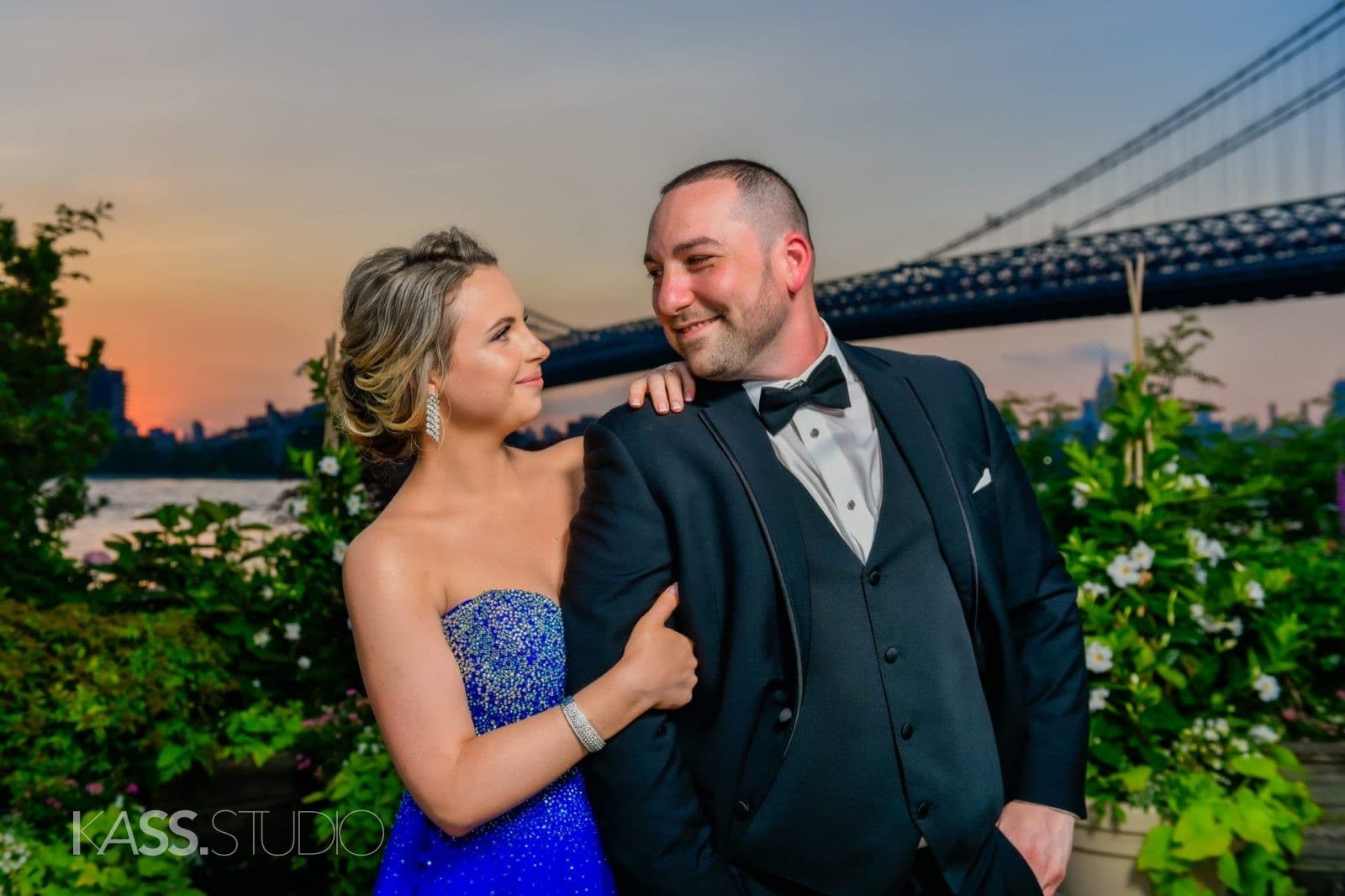
A day that starts in a hotel suite, moves to a ceremony across town, and ends at a waterfront room is a different day from one where everything happens under one roof. Travel time between locations is time I am on the clock and not photographing. A waterfront terrace at sunset, like the one in Jason and Kristine's pictures at the top of this note, is a gift, but only if someone has planned for the twenty minutes when the sky does that.
It is also where I learn whether the day leaves the city. Travel outside New York — Miami, upstate, the West Coast — is quoted case by case, with no piling on of fees. I would rather know about the trip now than add it to the conversation later.
3. What does the day have to protect?
This is the question that changes the quote, and the whole day.
I ask it plainly: if only a few photographs survive from this day, which ones have to exist? The answer is almost never "the cake." It is a grandmother who is flying in and does not travel well. It is a father's speech. It is a first look, or ten quiet minutes with the dress before anyone else arrives. At a mitzvah it might be the moment a kid finishes reading and looks up at the family. At a shower it might be one friend who could not be there last time.
Once I know that, I can build coverage around it. Maybe the day needs an extra hour at the start, because the moment you care about happens while getting ready. Maybe it needs a second shooter, because two important things happen in two rooms at the same time. Maybe it needs less than you thought, because the part you care about fits inside a shorter window.
That is what I mean by a quote that fits. Coverage starts at $350 an hour, and the hours are not the point. The point is that the hours land where the day is.
Why three questions, and not a long form
I have seen long questionnaires. They are thorough, and people skip them. A short set of questions gets real answers because it feels like a conversation, not homework.
It also does something I did not expect when I started. It helps the right people choose me, and the wrong fit choose someone else, early and without awkwardness. Someone who only wants the lowest number for a set block of hours usually stops replying after the third question. Someone who lights up and tells me about their grandmother is someone I am going to photograph well, because they already told me what to look for.
What I would tell another photographer
Do not quote off the date alone. Ask how fixed it is, ask where the day moves, and ask what it has to protect. Write the answer to the third question down, and look at it again the night before the day.
When the quote goes out, the next step is the same every time: we sign a contract together, and a 20% deposit locks in the date. That step is easy to agree to when the number already describes your real day.
If you have a date, or even just a month, tell me about it. Planning an event instead? Send your event details. Either way, I will ask the three questions, and you are welcome to answer them before I do.
Continue
If you want to go further
The note is the lesson. The next step, if you want one, is a real conversation about a date.